App Store age ratings: what I would check before release
I would check the features people can actually reach before updating the questionnaire. Here is a practical checklist for the announced changes.
Start with the next release
Apple announced Shared Location and Dating and Relationships declarations for November 16, 2026. From that date, they are required with app updates or questionnaire changes; all apps must complete them by January 12, 2027.
In Brazil, Apple specifies A16 for Shared Location and A18 for Dating and Relationships. Apple gives family-focused location sharing as an example of when a developer may request a lower official rating from Brazil's MJSP; the rating appears on the App Store after verification.
I would put an owner and a review date on the release checklist now. Waiting until the submission screen leaves less time to investigate a feature whose behavior differs across accounts or regions.
References: Apple's November 2 announcement
Follow the feature beyond its permission prompt
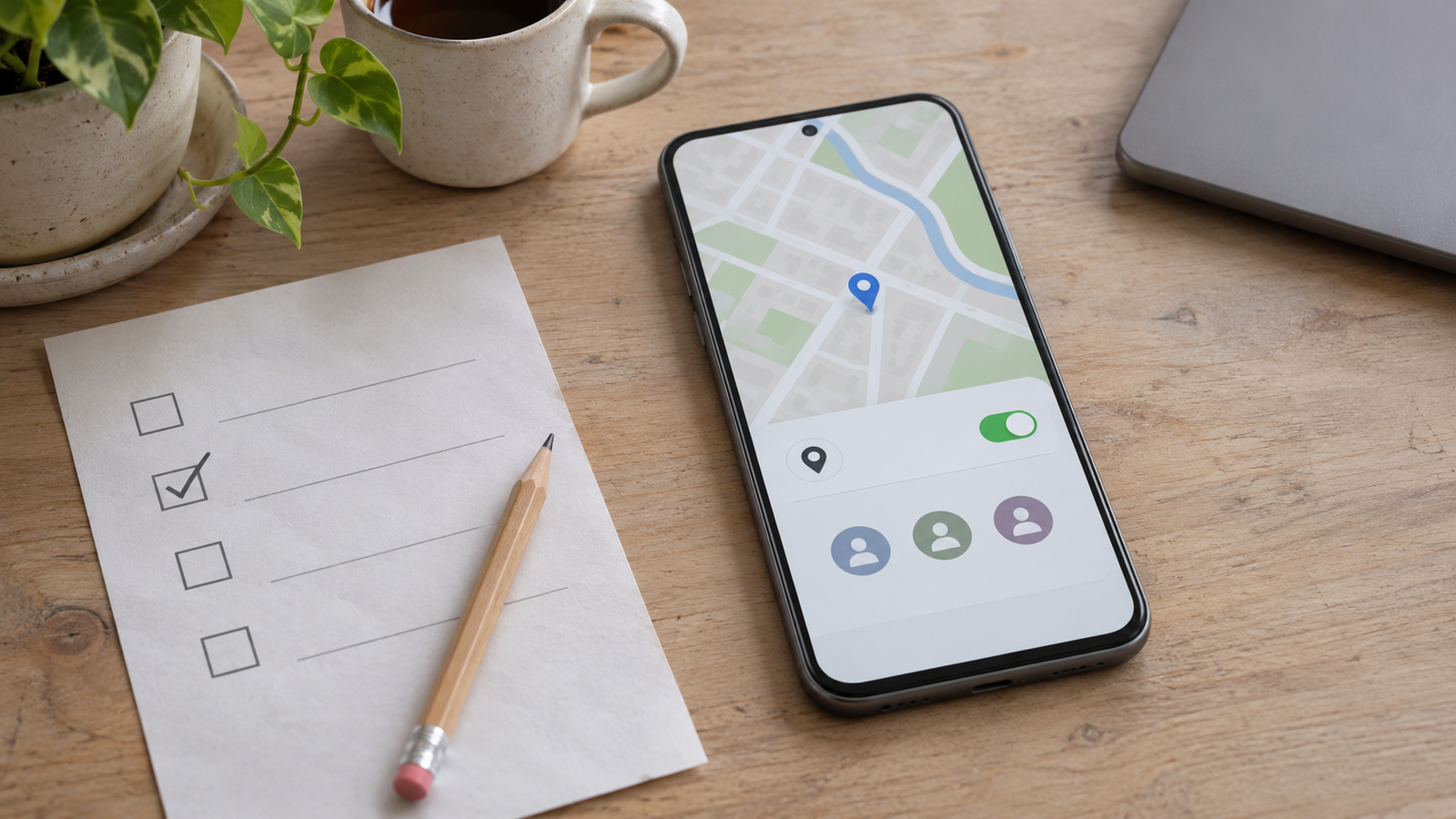
Shared Location covers location shared with people. Dating and Relationships includes dating features and virtual companions with romantic or sexual content. I would trace these journeys, including entry points available after login.
For QA, I would separate access to the device's location from the ability to send that location to someone. I would record who receives it, when sharing begins and how it stops. A denied GPS permission deserves its own test, alongside manually entered locations if the app supports them.
Apple's Help describes ratings derived from questionnaire answers. I would compare the answers against the behavior of the release build, its remote configuration and integrated SDK features. A disabled button on one test account gives me too little evidence about the whole app.
References: Apple's announced descriptor definitions
References: Apple Help: age-rating values and definitions
Five checks I would run
These are my recommended QA checks for preparing the publisher's decision:
- Inventory the release build, SDKs, live events and feature flags. Include features activated remotely after installation.
- Try anonymous and signed-in journeys. Record which accounts can reach sharing or relationship features and which restrictions actually take effect.
- Deny location permission, start and stop sharing, then test offline and reconnect behavior. Check whether another test account still sees a location after sharing ends.
- Repeat relevant flows across supported regions and languages. Compare visible explanations, settings and store metadata with what the app does.
- Attach reproducible steps and synthetic-account evidence to each uncertain answer. Ask the technical owner and publisher to resolve discrepancies before submission.
Keep the wider release review in view
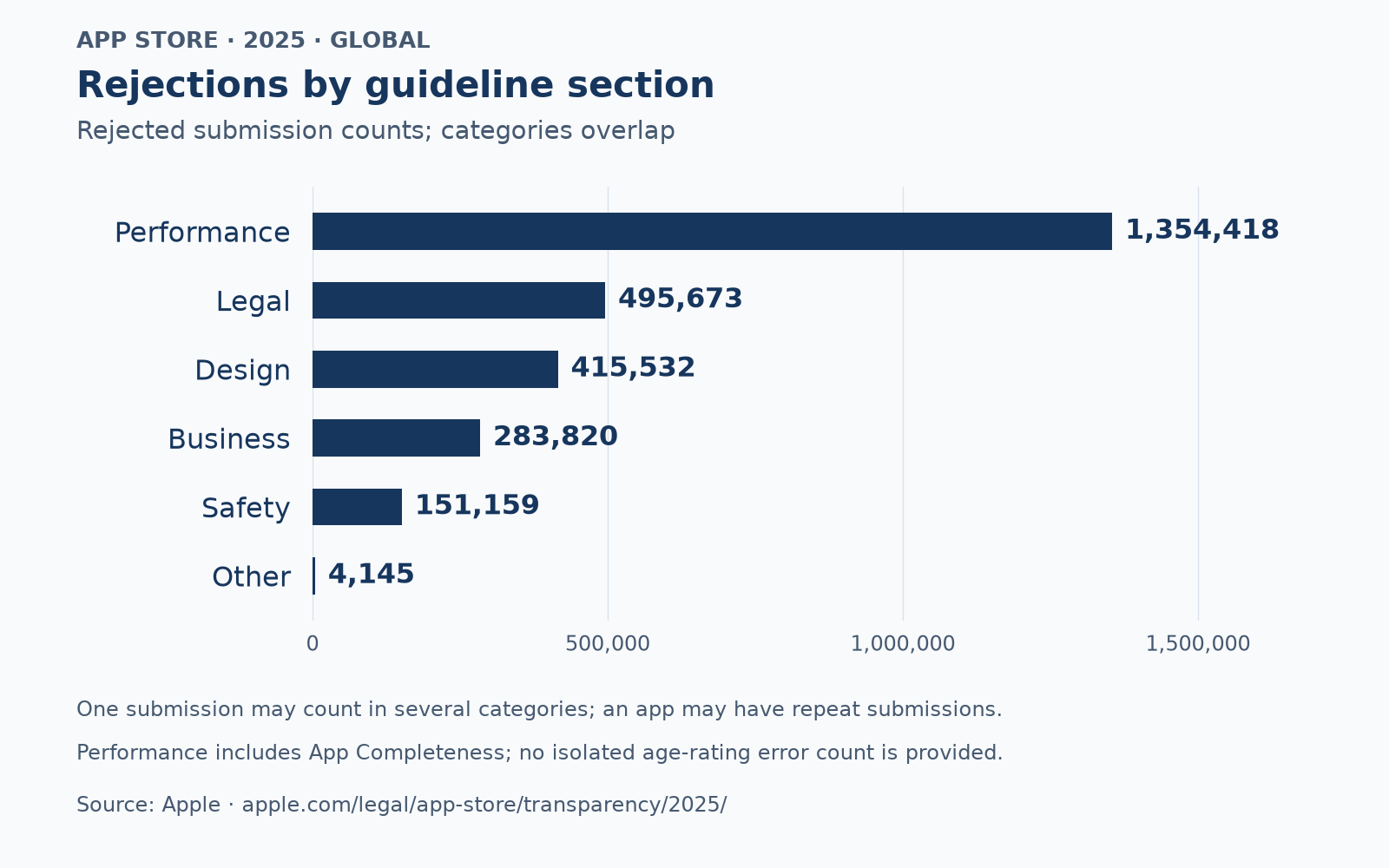
Apple's 2025 report records 9,100,620 submissions reviewed and 2,093,244 rejected. The chart shows rejection counts by guideline section. Performance covers review requirements including app completeness. These figures do not isolate age-rating errors or predict the effect of the upcoming descriptors.
I would use this historical context to keep questionnaire checks alongside functional testing and metadata review. A release can need attention in several areas at once.
Hand over evidence with the questionnaire
Apple documents the questionnaire under App Information, where global and regional results can be inspected. I would have the publisher review those results with the evidence, keep review notes clear and revisit the answers when features change.
Kakunyn offers mobile game testing and software QA. If your next release needs coverage for these flows, explore our mobile QA services and contact us to discuss the app, supported devices and scenarios you need to test.
References: Apple Help: set and edit an app age rating
About the author
Anderson Nagano is a co-founder of Kakunyn.
Have a product question or need a second opinion?
Talk with the Kakunyn team about your software and quality needs.